
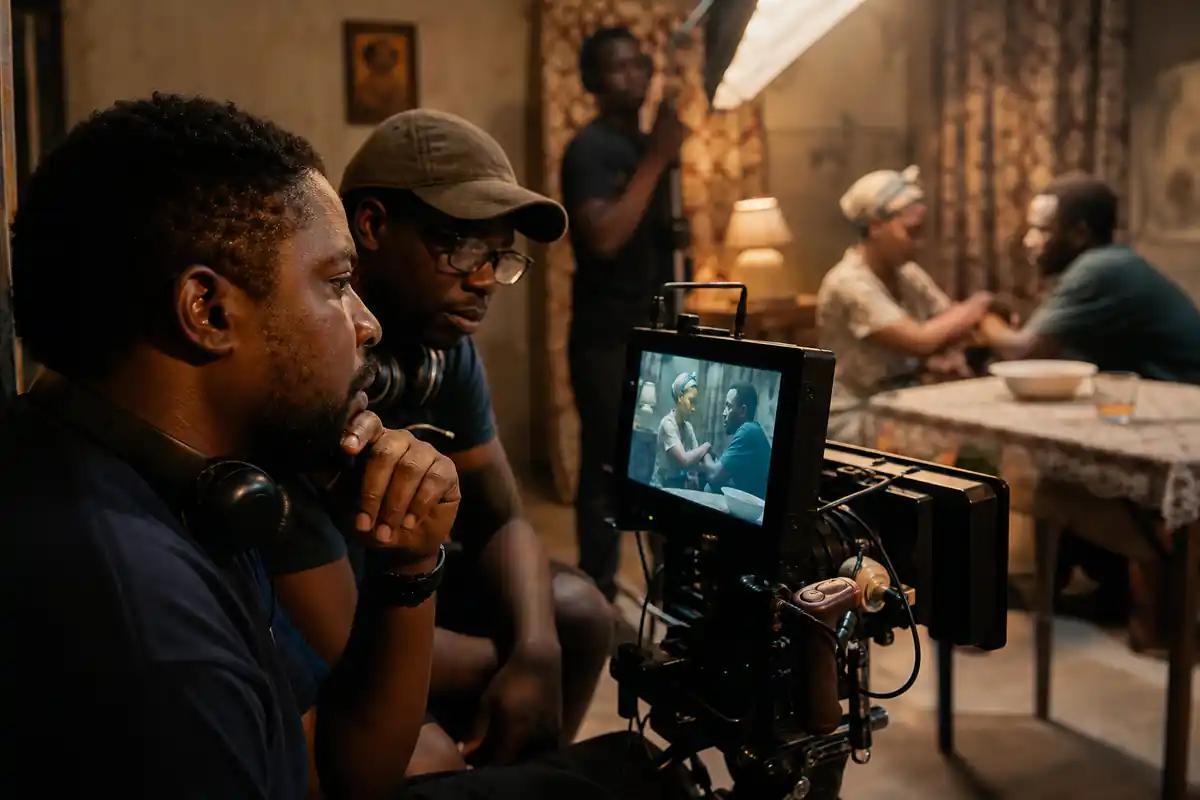
Put a pastor in the story, add a church scene, quote a Bible verse, and play worship music during the emotional moment. Is the film Christian now?
The question matters because Christian media is about much more than recognisable Christian symbols. A story can mention God frequently while saying very little that is truthful about Him. Another may contain no sermon at all while exploring forgiveness, sacrifice, sin, justice, reconciliation, or hope with unusual depth.
There is no simple formula for a Christian story, but there are important questions worth asking.
The Gospel cannot simply be decoration
Christianity should not function like a label placed on a story after everything else has been created. If removing the church scenes, Christian music, and Bible references leaves the meaning of the story completely unchanged, then those elements may only be decoration.
A Gospel-centred story should be shaped at a deeper level:
- How does it understand human beings?
- What does it believe is wrong with us?
- Where does it locate hope?
- What does forgiveness cost?
- Does grace erase the consequences of our choices?
- What does restoration look like?
- What kind of life does the story present as good?
Stories answer questions like these whether the filmmaker intends to or not. A Christian storyteller therefore has to think beyond representation and consider the worldview beneath the work.
Christian characters should still be human characters
Sometimes Christian storytelling becomes so concerned with delivering the correct lesson that its characters stop behaving like recognisable people. Everyone knows the right thing to say, doubt disappears quickly, conflicts resolve neatly, and the Christian character never struggles with pride, fear, envy, temptation, or misunderstanding.
Scripture does not tell stories that way. Peter confesses that Jesus is the Christ and later denies knowing Him. David demonstrates remarkable faith and commits terrible sin. Thomas follows Jesus and still struggles to believe the testimony of the resurrection. The Bible's honesty about people does not weaken its message; it helps us understand our need for grace. Christian stories should be able to show believers as people still being formed.
Excellence matters because the story matters
A good message does not remove the need for good filmmaking. Writing, acting, cinematography, sound, editing, pacing, and production design all matter. An audience should not be expected to excuse weak craft simply because the creators had sincere intentions.
The Gospel does not need entertainment to become powerful. But when Christians choose film, animation, audio, design, or another creative form, they should respect that form enough to learn how to use it well. Christian media should care deeply about both truth and the quality of the experience carrying it.
Not every Christian story requires a sermon
Some stories will proclaim the Gospel explicitly, and that is good. Others may explore one part of reality illuminated by a Christian understanding of the world: a marriage being rebuilt after betrayal, a father learning to ask his child for forgiveness, a young person deciding whether success is worth becoming someone they no longer recognise, a family grieving without pretending that faith removes pain, or a community choosing mercy when revenge would be easier.
These stories can make room for Christian truth without turning every character into a preacher. Jesus often taught through parables. A story gives people room to see.
Hope should be deeper than a happy ending
Christian storytelling should be careful not to confuse hope with ease. Sometimes the business does not recover, the relationship is not restored, the illness does not disappear, or the person who did wrong never apologises. Faith does not guarantee that every story resolves exactly as its characters desire.
Christian hope is deeper than circumstances arranging themselves pleasantly before the credits. It is rooted in who God is, what Christ has done, and the promise that suffering and death do not have the final word. That leaves room for stories that are joyful as well as stories that are painful, unresolved, and quiet. Hope can survive both.
The question is not only “Is it clean?”
Families understandably care about what enters their homes, and content choices matter. But Christian engagement with media cannot stop at asking whether a film contains profanity, sexuality, or violence. A technically “clean” story can still celebrate greed, vanity, cruelty, or self-worship. Another story may portray brokenness honestly in order to expose its consequences.
Discernment asks deeper questions:
- What does this story love?
- What does it make admirable?
- What does it ask me to laugh at?
- What does it say a successful human life looks like?
- What kind of person does it encourage me to become?
Those questions matter for audiences. They matter even more for Christian creators.
We need more than Christian versions of everything
Christian media does not need to imitate every successful format in popular culture and attach a Bible verse to it. There is room for something more imaginative: stories rooted in our communities, African Christian experiences told with care, children's work that presents faith with intelligence, documentaries that take difficult questions seriously, and films about ordinary believers whose quiet faithfulness matters.
The label alone is not enough. A Christian story should be shaped by truth, made with serious craft, honest about people, and open to grace. In one way or another, it should help its audience see the world more clearly in the light of Christ.
Scripture references
Matthew 5:14–16; John 1:14; Philippians 4:8; Colossians 3:17.